
How to Choose a Protein Powder That Suits You
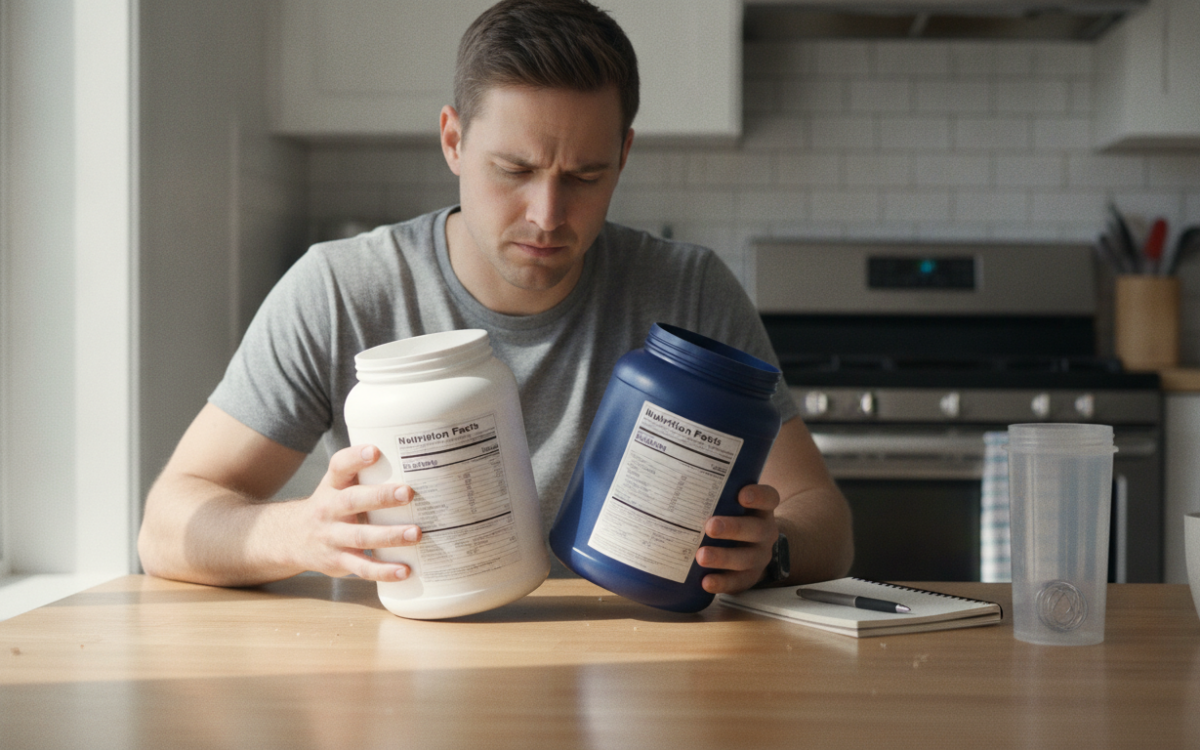
Quick answer: To choose a protein powder, match the type to your diet and goals, check the protein per serving, read the ingredient list for fillers and sugar, and compare the cost per serving. Pick one you enjoy drinking so you actually use it.
Key Takeaways
- Whey is cheap and complete; plant blends suit vegan or dairy-free diets.
- Check protein grams per serving, not just the headline on the tub.
- Shorter ingredient lists usually mean fewer fillers and additives.
- Compare cost per serving, not the tub price, to judge real value.
- Taste and mixability matter, because an unused tub helps no one.
Walk into any shop and the shelves are full of tubs. Big claims. Bright labels. It can feel confusing. But to choose a protein powder well, you only need to check a few things. This guide keeps it simple.
What should you look at first when you choose a protein powder?
Start with the type that fits your diet and your goal. The rest is detail.
There are a few main kinds. Whey comes from milk and mixes easily. Casein is also from milk but digests slowly. Plant blends use peas, rice, soya or hemp. Egg and collagen powders exist too, but they are less common for everyday use.
If you eat dairy and want value, whey is a safe start. If you avoid animal products, a plant blend works well. Pick the lane that matches how you eat. That makes the choice far easier.
How do you read a protein powder label?
Focus on the nutrition panel, not the front of the tub. The front sells. The back tells the truth.
Here is what to check:
- Protein per serving. Look for the grams in one scoop, usually around 20 to 25g.
- Serving size. A big scoop can hide a low protein figure.
- Added sugar. Some flavoured powders sneak in a lot.
- Ingredient list. Shorter is usually cleaner. Lots of long names can mean fillers.
- Allergens. Milk and soya are common. Check if that matters for you.
Because labels vary so much, always compare like for like. Two tubs may look similar but differ in protein and extras.
Why does the type of protein matter?
The type shapes how it fits your body, your diet and your routine. That is why it comes first.
Whey is a complete protein. It has all the building blocks your body needs. It also tends to mix smoothly and cost less. However, it does not suit vegans or people with a dairy issue.
Plant blends have come a long way. A good blend mixes a few sources so you still get a full range of amino acids. The texture can feel thicker. Some have an earthy taste. Also, they often cost a little more.
Casein suits those who want a slow release, maybe before bed. It is thicker and less of an all-rounder. Most people choose a protein powder from the whey or plant camps and keep it simple.
How do you judge value when you choose a protein powder?
Ignore the tub price. Work out the cost per serving instead. That is the number that counts.
Divide the tub price by the number of servings. A cheaper tub with tiny scoops may cost more per shake than a pricier one. Also check the protein per serving against that cost. More protein for the same money is better value.
Watch for marketing words too. Terms like premium or advanced do not always mean more protein. Let the panel guide you, not the slogan.
If you want trusted help spotting good value and avoiding dodgy claims, Which? offers independent consumer guidance.
What about taste, mixing and extras?
A powder only helps if you actually drink it. So taste and texture matter more than people admit.
Try to start with a small tub or a sample flavour before you commit to a big one. A tub you dislike just sits in the cupboard. That wastes money and does nothing for your goals.
Mixability is worth a thought too. Some powders go lumpy in water but smooth in milk. A shaker bottle helps a lot. Also think about when you will use it. A quick shake after exercise? Stirred into porridge? That changes which flavour and type you want.
Do you even need a protein powder?
For many people, food covers their protein just fine. Powder is a handy top-up, not a must.
Chicken, eggs, beans, fish, dairy and lentils all give good protein. A powder helps when you are busy, training hard, or struggle to hit your needs with meals alone. It is convenience in a scoop. Nothing more.
If you have a health condition, are pregnant, or take medicine, speak to a professional before adding supplements. This guide helps you compare, but it is not medical advice.
Putting it together to choose a protein powder
Keep the steps simple. Pick the type for your diet. Check the protein per serving. Scan the ingredients. Compare cost per serving. Then choose a flavour you will enjoy.
Do that, and you will choose a protein powder that fits your life and your budget. Take your time, compare a couple of options side by side, and buy with confidence.
Frequently Asked Questions
Is whey or plant protein better?
Neither is simply better. Whey mixes easily, costs less, and is a complete protein, so it suits dairy eaters. Plant blends suit vegan or dairy-free diets and have improved a lot. Pick the one that fits your diet, taste and budget rather than chasing a label.
How much protein per serving should I look for?
Most good powders give around 20 to 25g of protein per scoop. Check the nutrition panel, not the front of the tub. Also look at the serving size, because a large scoop can make a modest protein figure look better than it really is.
Do I need protein powder to build muscle?
No. You can build muscle with food alone if you eat enough protein from sources like meat, eggs, beans and dairy. Powder is a convenient top-up for busy days or hard training. It helps you hit your target, but it is never essential.
Are expensive protein powders worth it?
Not always. A high price does not guarantee more protein or better quality. Work out the cost per serving and compare the protein grams. Sometimes a mid-priced tub offers better value. Let the nutrition panel and cost per scoop guide your decision, not the slogans.
Is protein powder safe to use every day?
For most healthy adults, a daily shake alongside normal meals is fine. Stick to the suggested servings. If you are pregnant, have a kidney or liver condition, or take medicine, check with a doctor first. This is general guidance, not personal medical advice.
What is the difference between whey concentrate and isolate?
Isolate is more processed, so it has more protein per gram and less fat and lactose. Concentrate is less processed, cheaper, and still good for most people. If you are sensitive to lactose or want higher protein per scoop, isolate may suit you better.
For more, see our Health & Wellbeing guides.
Deals, rates and terms change often, and what suits one person may not suit another. Always check the latest details on the provider’s own website, and treat this as general guidance, not personal financial, legal or medical advice.