
How to Build a Simple Home Workout That Works
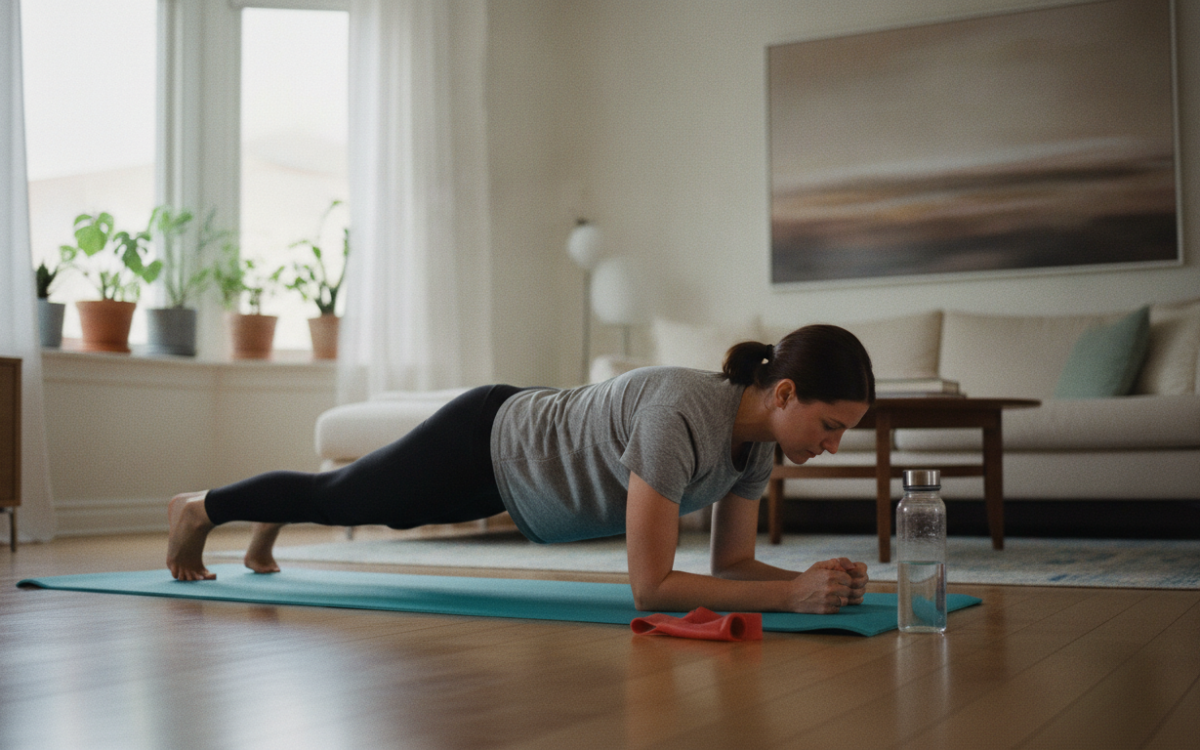
Quick answer: To build a simple home workout, pick a few basic moves that use your own body weight, work your main muscles, fit your space, and take 20 to 30 minutes. Start light, add a little each week, and repeat it a few times to build a habit.
Key Takeaways
- A simple home workout needs no gym and little or no kit.
- Mix push, pull, legs, and core moves for a balanced plan.
- Start with short sessions and add more slowly over time.
- Consistency matters more than intensity when you begin.
- Always warm up first and stop if something causes sharp pain.
What is a simple home workout?
A simple home workout is a short set of exercises you can do at home with little or no kit. It usually uses your own body weight. For example, squats, press ups, and planks. You can do it in a small space. You do not need a gym.
The goal is to keep it easy to follow. Because if it is too hard to set up, you will skip it. A good plan fits your time and your room. It also matches your current fitness level.
How do you build a simple home workout?
Start by choosing moves that cover your main muscle groups. Think of four simple types. Push, pull, legs, and core. If you pick one from each, you cover most of your body.
- Push: press ups or wall press ups
- Pull: towel rows or a resistance band pull
- Legs: squats, lunges, or step ups
- Core: planks, dead bugs, or sit ups
Next, set a simple structure. For example, do each move for 30 to 45 seconds. Rest for 15 seconds. Then move to the next one. Repeat the whole round two or three times. That gives you a full simple home workout in about 20 minutes.
Keep your first few sessions light. You can always add more later. Also, pick a regular time. Morning or evening both work. The best time is the one you will stick to.
Why does a simple home workout matter?
A simple home workout matters because it removes the usual excuses. No travel. No waiting for machines. No big cost. You just need a bit of floor space and a few spare minutes.
It also helps you build a habit. Short, regular sessions beat rare long ones. Because your body responds to steady effort over time. A simple plan is easier to repeat, so you keep going.
For general guidance on staying active, the NHS pages on GOV.UK are a solid starting point. They explain how much movement adults are advised to aim for each week.
What kit do you really need?
Honestly, very little. Your body weight does most of the work. However, a few cheap items can add variety as you improve.
A resistance band is light and folds away. A mat makes floor moves more comfy. A sturdy chair works for step ups and dips. When you compare kit, look at three things. Does it suit your space? Will you use it often? Can it do more than one job?
Avoid buying lots at once. Start bare, then add only what you miss. That way you spend less and keep your simple home workout easy to set up.
How do you make it harder over time?
You make a simple home workout harder by adding small steps, not big jumps. This is called progression. It keeps your body challenged without hurting you.
Try a few of these. Add one more round. Do a few extra reps. Slow the movement down. Shorten your rest. Or move to a tougher version of a move, like a full press up instead of a wall press up.
Change just one thing at a time. Then see how your body feels for a week. If it feels fine, add another small step. This steady path helps you avoid strain and stay keen.
How do you compare different workout styles?
Think about your goal first. Some people want strength. Others want to feel fitter, calmer, or more mobile. Your goal shapes the moves you pick.
Also weigh up time and energy. A short, sharp circuit saves time but feels tough. A slower routine with longer rests is gentler. Neither is wrong. The right one is the one you enjoy and repeat.
To judge value, ask how it fits your life. A plan that needs 10 minutes and no kit may beat a fancy one you never do. Consistency is the real measure of a good simple home workout.
Staying safe and listening to your body
Always warm up for a few minutes first. Light marching or arm circles work well. This gets your body ready and lowers your risk of a pull.
Move with control. Keep your back steady and your breathing smooth. Stop if you feel sharp pain. Mild muscle ache after a session is normal. Sharp or lasting pain is not, so rest and seek advice if it stays.
If you have a health condition or you are new to exercise, it is wise to check with a professional before you start. A simple home workout should leave you feeling better, not sore for days.
Make it stick
Routine beats motivation. Lay out your mat the night before. Put your workout at the same time each day. Tick off each session on a calendar. Small wins keep you going.
Now you have the tools to plan one. Compare the options above, pick the moves that suit you, and start small with confidence. Build your simple home workout around your own life, and let it grow with you.
Frequently Asked Questions
How long should a simple home workout be?
For most beginners, 20 to 30 minutes is plenty. That covers a short warm up, a few moves, and a cool down. You can start with just 10 to 15 minutes if you are new. What matters most is doing it often, not making it long or exhausting.
How many times a week should I do it?
Three to four sessions a week suits most people starting out. Leave a rest day between harder workouts so your body can recover. You can do gentle movement, like a walk, on your off days. Build up slowly rather than training hard every single day.
Can I build muscle with no equipment?
Yes, you can build some muscle using body weight alone, especially as a beginner. Moves like press ups, squats, and lunges challenge your muscles well. As you get stronger, slow the moves down or add harder versions. Later, a resistance band can add more challenge cheaply.
What if I have a very small space?
A small space is fine. Most body weight moves need only enough room to lie down and stretch your arms. Choose moves that do not need jumping if you lack height or have neighbours below. A mat tucked in a corner is often all the kit you need.
Do I need to warm up every time?
Yes. A few minutes of light movement warms your muscles and lowers your injury risk. Try marching on the spot, arm circles, and gentle squats. A short cool down with easy stretches at the end also helps you feel better and recover more smoothly afterwards.
How do I stay motivated to keep going?
Set a regular time and keep your kit ready so starting is easy. Track each session so you can see progress. Pick moves you enjoy, and start small so it feels doable. Small, steady wins build a habit far better than pushing too hard too soon.
For more, see our Health & Wellbeing guides.
Deals, rates and terms change often, and what suits one person may not suit another. Always check the latest details on the provider’s own website, and treat this as general guidance, not personal financial, legal or medical advice.